

“I know people who work in AI risk mitigation and do not expect their children to make it to high school.”
When I first heard this, I laughed.
Then I realised the person saying it wasn’t joking.
I. Wonder
For the last year, I have been obsessed with artificial intelligence. The first six months of that obsession were filled almost entirely with wonder.
As an AI filmmaker, it felt as though science fiction had quietly become reality. Every week seemed to bring a new breakthrough: researchers discovering potential drugs in record time, scientists building thought decoders for paralysed patients, farmers using machine learning to optimise crops, artists creating films without Hollywood budgets, and ordinary people automating away hours of repetitive work. AlphaFold alone — DeepMind’s protein-structure prediction system — compressed what might have taken decades of biology research into a matter of months, identifying structures for over 200 million proteins.
For a while, I genuinely thought this might be one of the best times in human history to be alive.
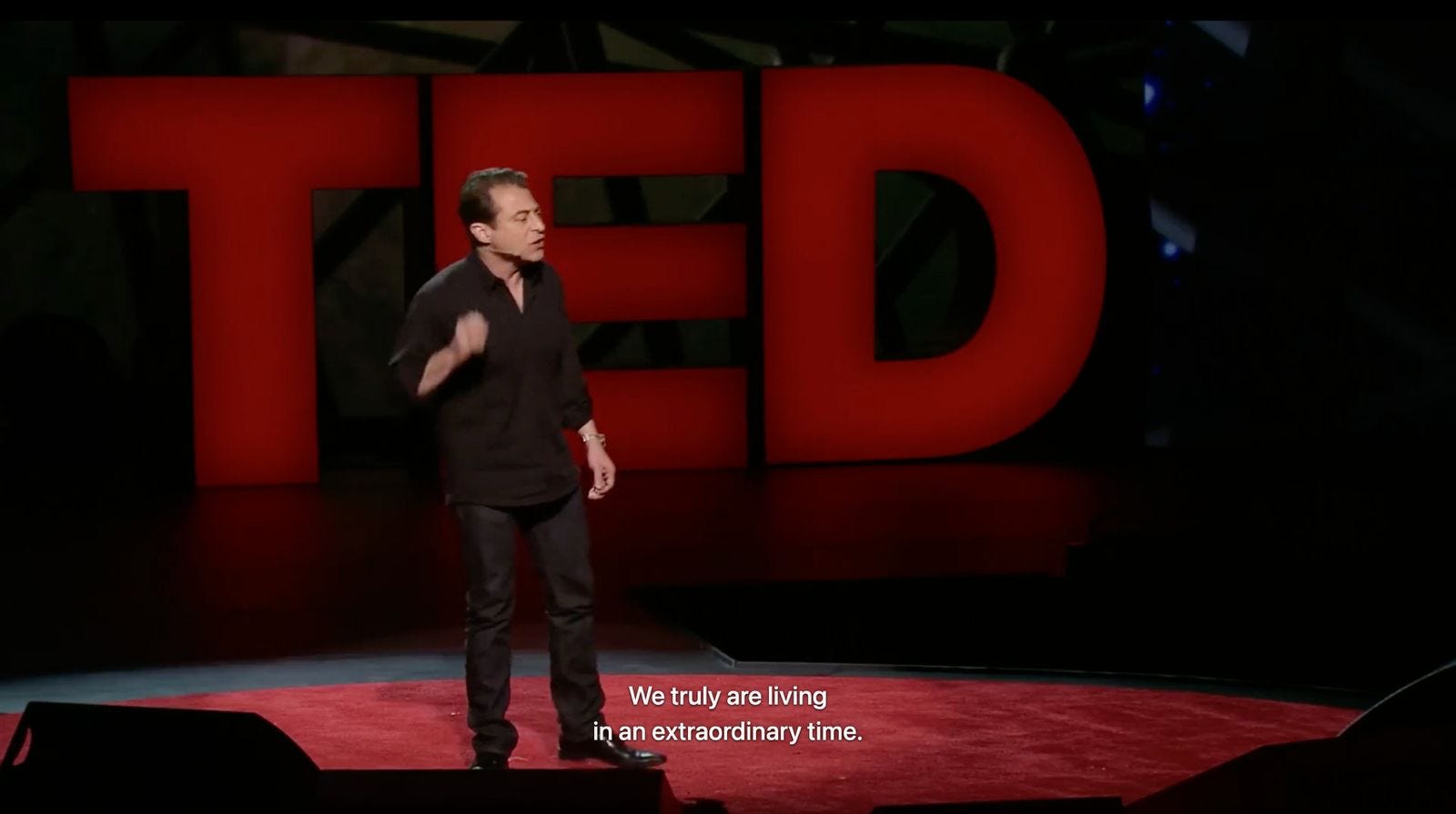
We live in a world where a teenager with a laptop can access more information than kings, philosophers and scholars could dream of. A world where you can have conversations with systems trained on centuries of human knowledge — the works of Socrates, Shakespeare, Leonardo da Vinci and countless others, available in seconds, in your palm. A world of supercomputers that can help a filmmaker shoot a science fiction story without a Hollywood budget.
But every technology carries a shadow.
II. The Rabbit Hole
The deeper I went, the darker some of the questions became.
What happens when technologies become capable of manipulating human behaviour at unprecedented scales — to the point where researchers at MIT have documented that false news spreads six times faster on social media than true news, and that AI-generated content is often indistinguishable from human writing? What happens when the computational infrastructure supporting AI consumes enormous amounts of energy and water — when a single large AI training run can emit as much carbon as five cars over their entire lifetimes (Emma Strubell, 2019)? What happens when powerful biological and chemical knowledge becomes more accessible — what one biosecurity report described as “the democratisation of danger”? What happens to employment when the McKinsey Global Institute estimates that up to 375 million workers globally may need to switch occupational categories by 2030?
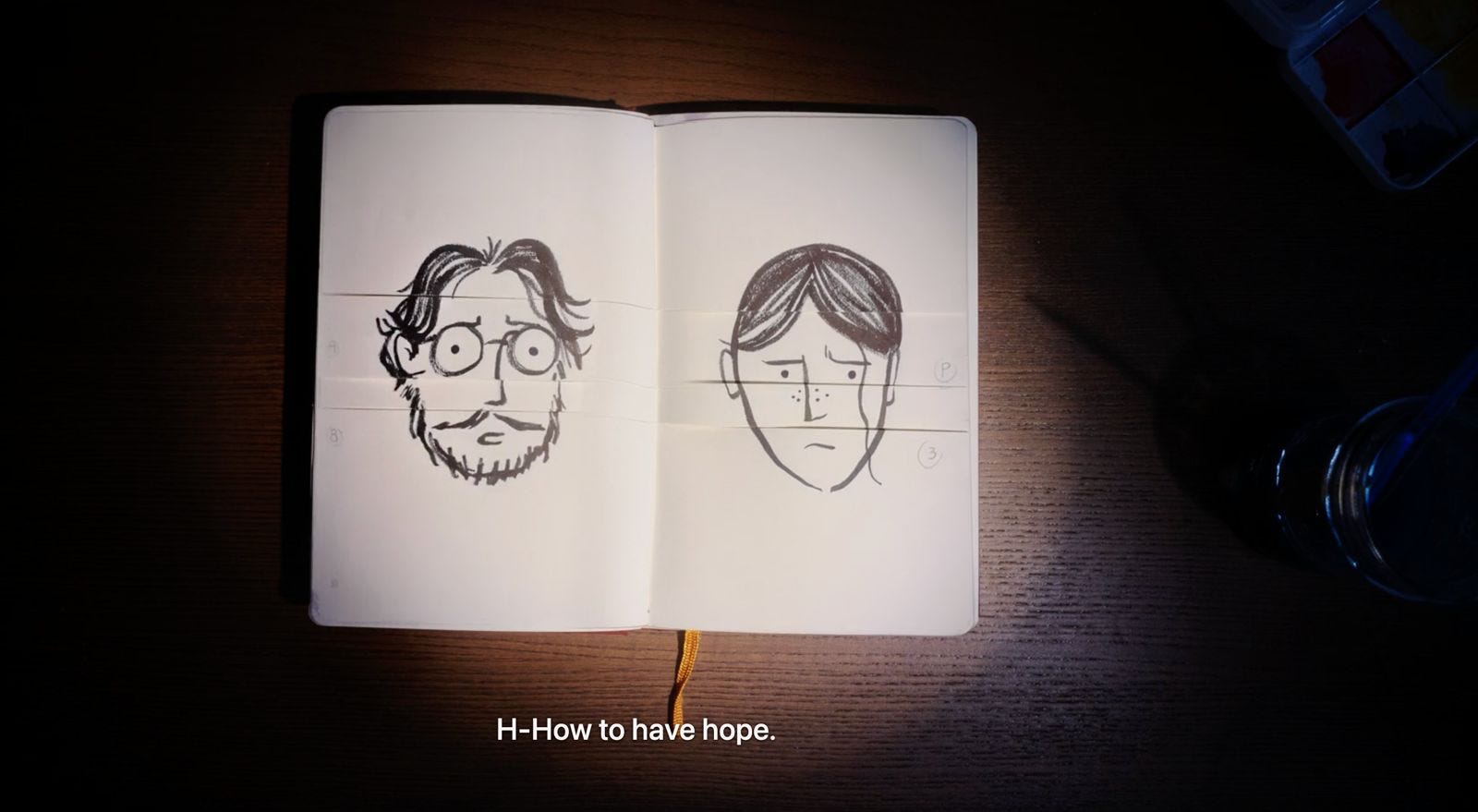
And perhaps most unsettlingly, what happens when we outsource too much of our thinking itself?
Suddenly, the same technology that felt magical began to feel frightening.
III. Two Mentors, Two Worlds
Like many people trying to make sense of this moment, I turned to people smarter than me.
One professor told me he didn’t think AI was making him dumber at all. If anything, it was helping him learn faster — removing the tedious work of searching for resources and accelerating access to information. The tool, he said, was clearing the path.
Another mentor — an experienced professional who has worked with major organisations — expressed almost the opposite concern. She worried deeply about the environmental costs and refused to delegate any meaningful part of her work to AI systems. For her, the outsourcing felt like a loss, not a gain.
What fascinated me wasn’t that they disagreed.
It was that they were both intelligent, informed people looking at the same technology and arriving at radically different conclusions.
Psychologists have names for some of the forces at play here. The availability heuristic — our tendency to judge risk based on how vividly we can imagine it — makes a hypothetical superintelligence ending civilisation feel more urgent than the slower, quieter erosion of human attention spans. Negativity bias pushes us to weigh potential dangers more heavily than potential benefits, because evolution rewarded creatures that paid close attention to threats. And confirmation bias means that once we’ve decided AI is either salvation or catastrophe, we tend to notice only the evidence that agrees with us.
Perhaps that is why conversations around AI often feel split between extremes.
IV. Doomers, Accelerators, and the Space Between
On one side are the accelerators, who speak of abundance, scientific breakthroughs, and what some call a “post-scarcity world” — a utopia where automated labour finally frees humanity to pursue what Maslow would have called self-actualisation needs. (Though, as my notes remind me, Maslow’s hierarchy was always a little flawed; Michelangelo reportedly painted without food and water.)
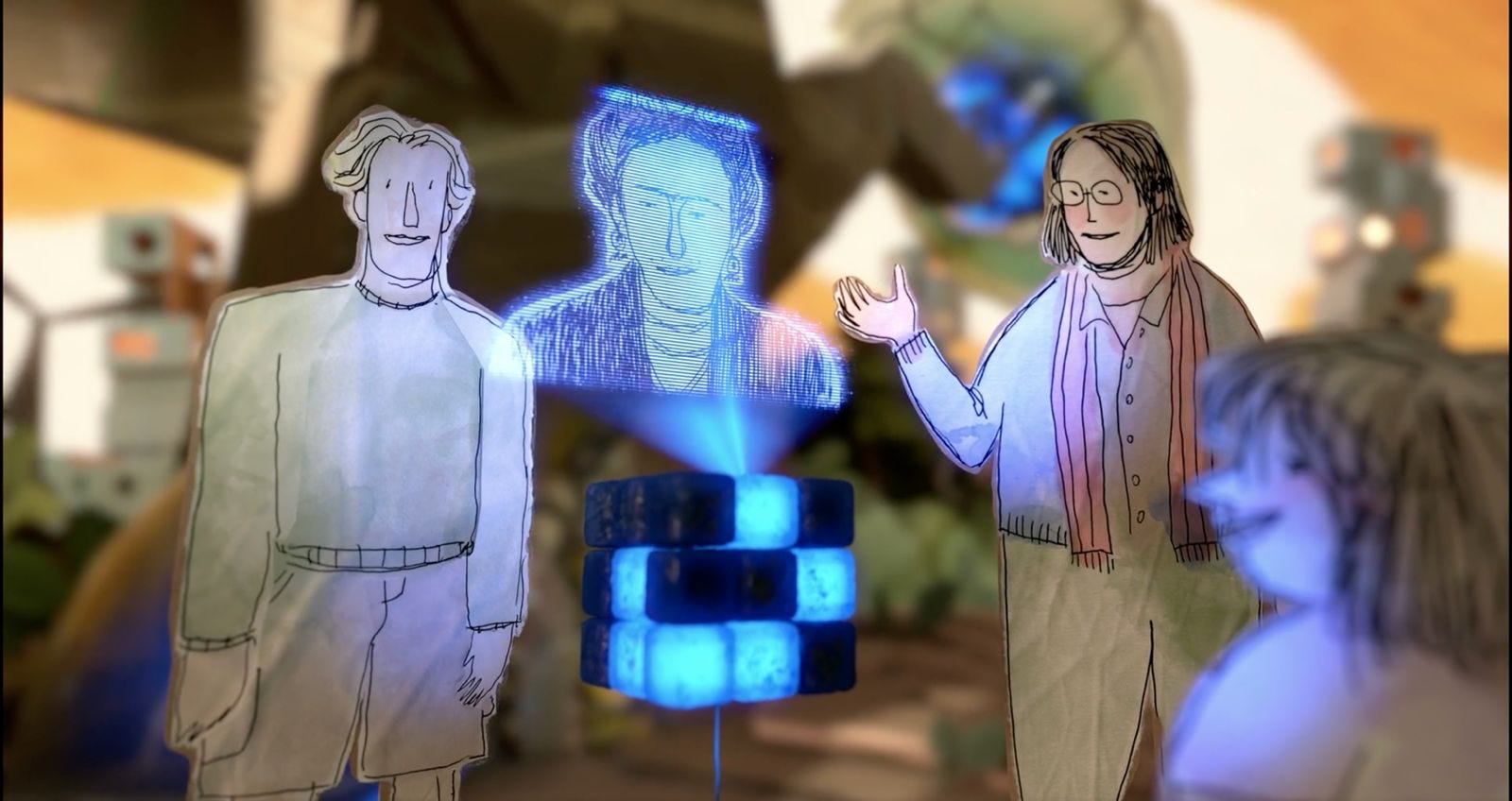
On the other side are the doomers, who warn of existential risk and argue that artificial intelligence should be treated as a global priority alongside pandemics and nuclear war. Sam Altman himself has remarked that our children may never be smarter than AI. Meanwhile, others note the regulatory absurdity with striking clarity: “There is more regulation on selling a sandwich in public than there is on building potentially world-ending AGI.”
Both statements are difficult to ignore.
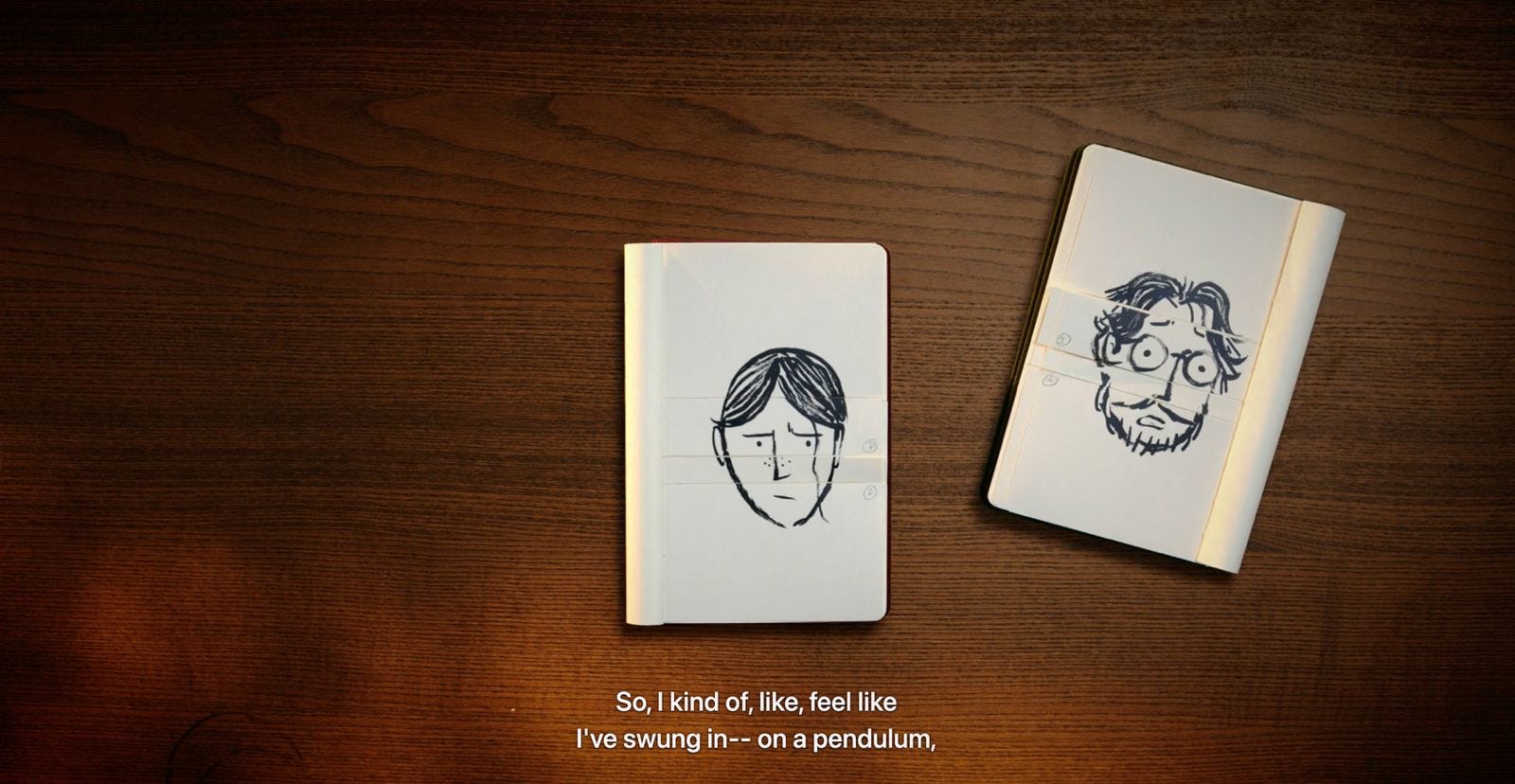
The ratio of people working to advance AI capabilities versus those working to mitigate its risks is stark. Estimates suggest that for every roughly 20 alignment or safety researchers, there are perhaps 20,000 engineers building more powerful systems. The field of AI safety remains critically understaffed, even as labs race ahead.
This is also a geopolitical race. Countries are not just competing commercially — they are fighting to build the first and most dominant AI infrastructure. The choices being made now, under competitive pressure, in quarterly earnings cycles, will shape the next century.
V. Sisyphus and the Penny Dreadfuls
Around this time, I stumbled upon Carlo Iacono’s essay Books and Screens, and it completely reframed how I thought about technological panic.
Carlo draws on the work of psychologist Amy Orben, who identifies what she calls the “Sisyphean Cycle”: each generation becomes convinced that a new technology will corrupt young minds. Politicians amplify these fears while deflecting from deeper structural issues — inequality, educational underfunding, mental health systems in crisis. Research begins too late. By the time evidence accumulates showing complex, context-dependent effects, a new technology has arrived and the cycle begins again.
History is full of examples. Victorians worried that “penny dreadfuls” would corrupt working-class children. Critics feared novels would damage morality and trigger mass elopements. Radio would supposedly destroy children’s capacity for thought. Comic books would produce juvenile delinquents. Television would end reading. Video games would produce violence. Social media would unravel society.
As Carlo writes, each panic uses identical rhetoric: addiction metaphors, moral corruption, passive victimhood, apocalyptic predictions. The predicted catastrophes rarely arrive in the forms people imagined.
But his most interesting observation is that these panics were often not really about the technology itself.
When compulsory education expanded in England and Wales — formalised by the 1880 Education Act — public anxiety emerged around what newly literate working-class children were reading. The concern wasn’t that literacy was declining.
It was that literacy was escaping elite control.
That distinction feels important. Because it raises a question that echoes through history: when we panic about new technologies, are we afraid of the technology itself — or are we afraid of what happens when power becomes distributed?
VI. But This Time Is Different (And Also the Same)
And yet.
I don’t think this means every technological concern is irrational.
The penny dreadfuls didn’t follow children into their bedrooms at midnight, vibrating with notifications. They didn’t deploy machine learning models trained on billions of behavioural data points to keep a child scrolling. Today’s most viral AI systems can generate deepfakes indistinguishable from reality, write targeted persuasion at scale, and — as researchers at Stanford and elsewhere have documented — can subtly shift political opinions over repeated interactions in ways users don’t consciously notice.
Today’s systems are different.
They are not merely media.
They are environments.
Carlo’s central argument is that the real problem isn’t books versus screens. The real problem is habitat. We don’t struggle with video versus text. We struggle with feeds versus focus. One exists inside an ecosystem designed for contemplation. The other exists inside an ecosystem designed to maximise engagement — what behavioural economists call variable reward schedules, the same psychological mechanism that makes slot machines addictive.
This is the concept of Goodhart’s Law applied to culture:
When a measure becomes a target, it ceases to be a good measure.
Attention became the target.
Human flourishing became collateral damage.
VII. The Apocaloptimist’s Documentary
When Daniel Roher — whose production company was also behind Everything Everywhere All At Once — made his documentary Apocaloptimist, I watched it partly out of professional curiosity and partly out of something closer to dread.
The film follows people building powerful AI systems alongside those trying to prevent catastrophic outcomes. What struck me most wasn’t the technology.
It was the uncertainty.
Nobody really knows where this story ends. Not the builders. Not the regulators. Not the critics. Not the optimists. Not the pessimists.
One line from the documentary stayed with me:
“Intelligence is the ability to solve problems. Wisdom is the ability to know which problems to solve.”
That distinction may become one of the defining challenges of our century. We are building systems of unprecedented intelligence. The question of whether we are building wisdom alongside them remains largely unanswered.
And perhaps that’s what generates so much anxiety. Human beings crave certainty — what psychologists call intolerance of ambiguity. Artificial intelligence currently offers almost none.
VIII. Containers for Attention
Carlo’s solution is not retreat. It is architecture.
What strikes him most is the difference between people who’ve learned to construct what he calls “containers for attention” — bounded spaces and practices where different modes of thinking become possible — and those who haven’t.
Ideas now travel through multiple channels simultaneously. A documentary provides emotional resonance and visual evidence. Its transcript enables precision — the ability to locate a specific argument. A newsletter unpacks implications. A podcast allows ideas to marinate during a commute. As Carlo writes: each mode contributes something the others cannot. This isn’t decline. It’s expansion.
The people who flourish in this environment are not more disciplined by nature. They simply learn to choreograph technology rather than be choreographed by it. They watch documentaries with notebooks. They leave phones outside reading rooms. They listen to podcasts during long walks. They are not rejecting technology. They are designing their relationship with it.
Carlo also makes a quiet, radical point about learning differences: those who cannot sit through printed text but flourish with audiobooks were not told they had learning disabilities — they were told they had disabilities that prevented them from learning through the one true method we recognise. Give them text as audio, and the “disability” vanishes. The problem was never in them. The problem was in the inflexibility of the environment.
The same logic applies to AI.
IX. The Choice
The debate is framed as humans versus machines.
The actual question is about incentives.
Social media already taught us the lesson. When engagement became the primary metric, everything else became secondary. Children’s mental health. Political discourse. The texture of daily attention. All of it became secondary to time-on-platform.
If powerful technologies are shaped by incentives, then incentives can be challenged. They can be regulated. They can be redesigned. They can be held accountable.
As Carlo writes, the choice isn’t between books and screens.
The choice is between intentional design and profitable chaos.
The same applies to AI.
The future does not belong to those who resist all technology, nor to those who surrender to it uncritically. It belongs — as Carlo puts it — to people who can dance between all modes without losing their balance. Someone who can read deeply when depth is needed, skim efficiently when efficiency matters, and engage with AI as a tool in a choreography they are directing — not one that is directing them.
X. What I Am Building
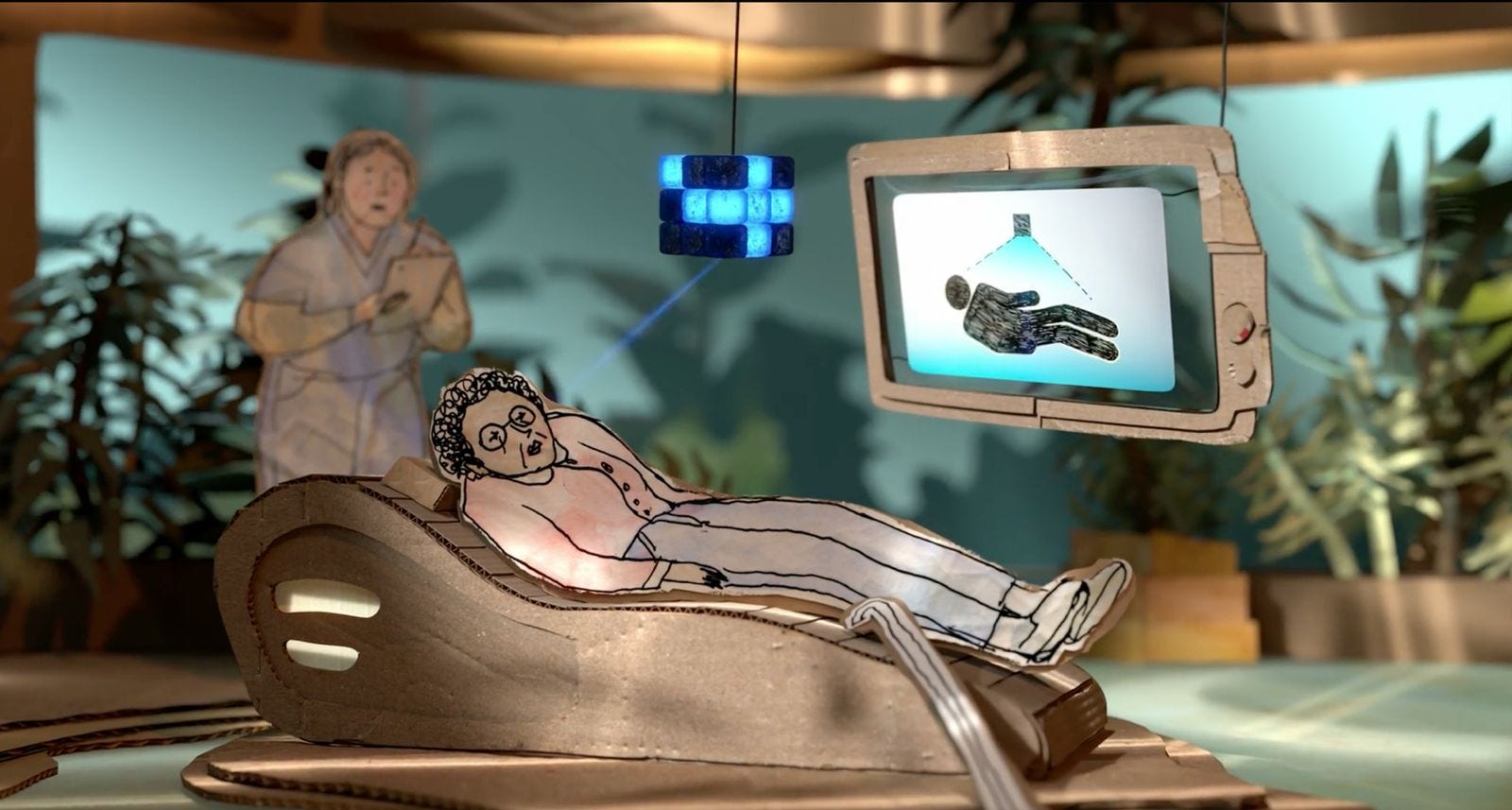
So what am I building?
Honestly? Nothing yet. I am a storyteller.
And I believe that stories shape how societies imagine technologies long before regulations arrive. The films we make, the essays we write, the conversations we have — these are the early architecture of culture. They determine what becomes thinkable.
As an AI filmmaker, my responsibility is not to contribute more noise to the machine. Not to create more AI slop — more hollow, frictionless content generated to fill feeds and chase algorithms. But to preserve something profoundly human within this moment: curiosity, craft, the willingness to sit with uncertainty and make something true anyway.
The future of AI is not something happening to us.
It is something being built by us.
History suggests that technology is rarely destiny. The printing press was not destiny. The internet was not destiny. Social media was not destiny. They became what societies allowed them to become. And what societies allowed them to become was shaped, in large part, by the stories people told about them.
Whenever these conversations become overwhelming, I return to one line from Apocaloptimist:
You cannot control the story of the unfolding of the world.
But you can always control the story of your own life.
So go on. Live a little.
We are all apocaloptimists now.
Sources & References
Carlo Iacono — Books and Screens (essay). Concepts referenced: the Sisyphean Cycle, containers for attention, habitat vs. mode, the 1880 Education Act and “penny dreadfuls,” intentional design vs. profitable chaos, neurological diversity and audiobooks.
Daniel Roher — Apocaloptimist (documentary, 2024/2025). Produced by the team behind Everything Everywhere All At Once. Quotes referenced: Sam Altman on children and AI intelligence; the sandwich vs. AGI regulation comparison; “intelligence is the ability to solve problems, wisdom is the ability to know which problems to solve.”
Amy Orben — Research on the Sisyphean Cycle and technology panics. Published in journals including Nature Human Behaviour.
Emma Strubell et al. — Energy and Policy Considerations for Deep Learning in NLP (2019). Carbon cost of AI training runs.
McKinsey Global Institute — Jobs Lost, Jobs Gained: Workforce Transitions in a Time of Automation (2017). Estimate of 375 million workers needing to shift occupational categories by 2030.
MIT Media Lab / Soroush Vosoughi et al. — The spread of true and false news online, Science (2018). False news spreads six times faster than true news on social media.
DeepMind / AlphaFold — Protein structure prediction; over 200 million protein structures released to the scientific community (2022).
Cognitive psychology concepts referenced: Availability heuristic (Tversky & Kahneman), negativity bias, confirmation bias, variable reward schedules (B.F. Skinner), intolerance of ambiguity, Goodhart’s Law.
Maslow’s Hierarchy of Needs — Abraham Maslow (1943). Referenced in the context of post-scarcity arguments and their limitations.